Audiology and the Future of Tinnitus Care in India: Capacity, Access, and Precision
India represents one of the most important frontiers for the future of tinnitus care. With a large and diverse population, rising life expectancy, and increasing awareness of hearing and sound intolerance conditions, the country faces both significant challenges and unique opportunities. This article examines how recent developments in audiology, assessment, and service delivery are shaping tinnitus care in India.
Over the past year, research and clinical discussion have increasingly highlighted the scale of unmet tinnitus need in India. Large numbers of individuals experience tinnitus alongside hearing loss, noise exposure, occupational risk, and age-related auditory change. However, access to specialist tinnitus services remains limited, particularly outside major urban centres. This gap has driven interest in scalable, audiology-led models of care.
Audiological assessment remains the cornerstone of tinnitus management in India. Advances in diagnostic capability, including improved audiometry, speech-in-noise testing, and psychoacoustic tools, are helping clinicians differentiate tinnitus subtypes more accurately. Greater emphasis is also being placed on distinguishing tinnitus from hyperacusis and misophonia, conditions that require different management strategies but are often conflated in routine practice.
Training and workforce development are recurring themes. The article highlights the need for structured education in tinnitus assessment, counselling, and evidence-based intervention within audiology curricula. As audiologists often serve as the first point of contact for patients with tinnitus, strengthening their role is seen as essential for improving outcomes and reducing inappropriate referral or medicalisation.
Digital and hybrid models of care are also gaining traction. Online education, remote follow-up, and app-based support tools offer potential solutions to geographic and workforce constraints. When integrated into stepped-care frameworks, these approaches can extend reach while preserving access to specialist input for more complex cases.
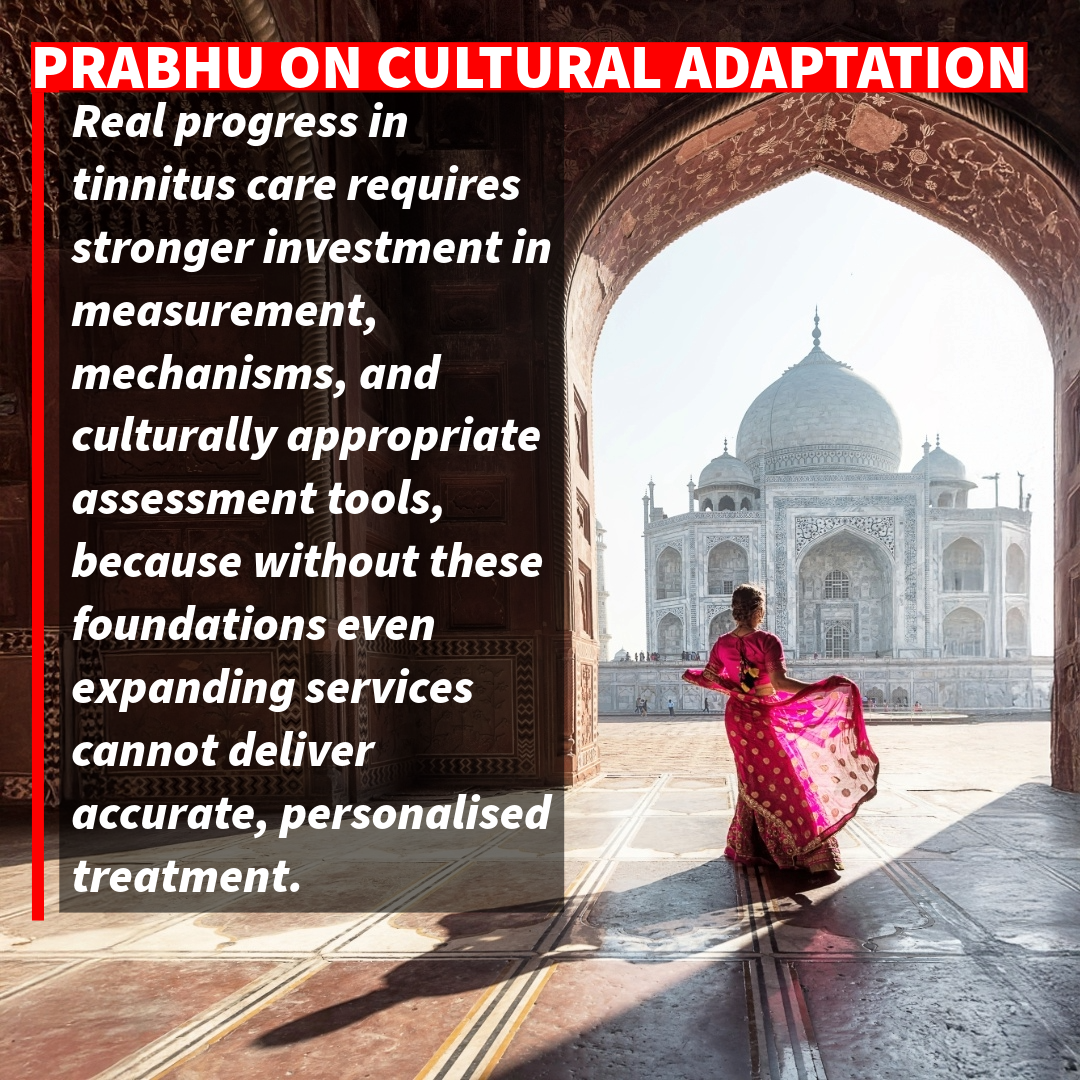
Cultural and contextual factors are central to tinnitus care in India. Beliefs about health, stigma associated with psychological distress, and variability in health literacy influence how tinnitus is experienced and managed. The article emphasises the importance of culturally sensitive communication and locally adapted outcome measures to ensure that assessment and intervention remain relevant and effective.
The role of interdisciplinary collaboration is also highlighted. Stronger links between audiology, otology, neurology, psychology, and primary care are needed to support accurate diagnosis and appropriate referral. In particular, improved recognition of treatable subtypes, such as pulsatile and somatic tinnitus, can prevent prolonged distress and unnecessary chronicity.
Overall, the article presents tinnitus care in India as an evolving field. With targeted investment in training, assessment, and scalable service models, audiology has the potential to play a central role in meeting growing demand. The Indian context also offers valuable lessons for other regions facing similar challenges of scale, diversity, and access.
Citation
Aazh H. Audiology, Measurement and the Future of Tinnitus Care in India: An Interview with Dr Prashanth Prabhu, All India Institute of Speech and Hearing, Mysuru. Annual Tinnitus Report, Volume 1, 2026, pp. 70–74.
Click here to read the PDF of this article
Click on the link below to access the full Annual Tinnitus Report 2026: https://hashirtinnitusclinic.com/news/annual-tinnitus-report/