The Tinnitus Research Initiative Conference 2026: Jumping the Wall Toward Mechanism-Based Tinnitus Care
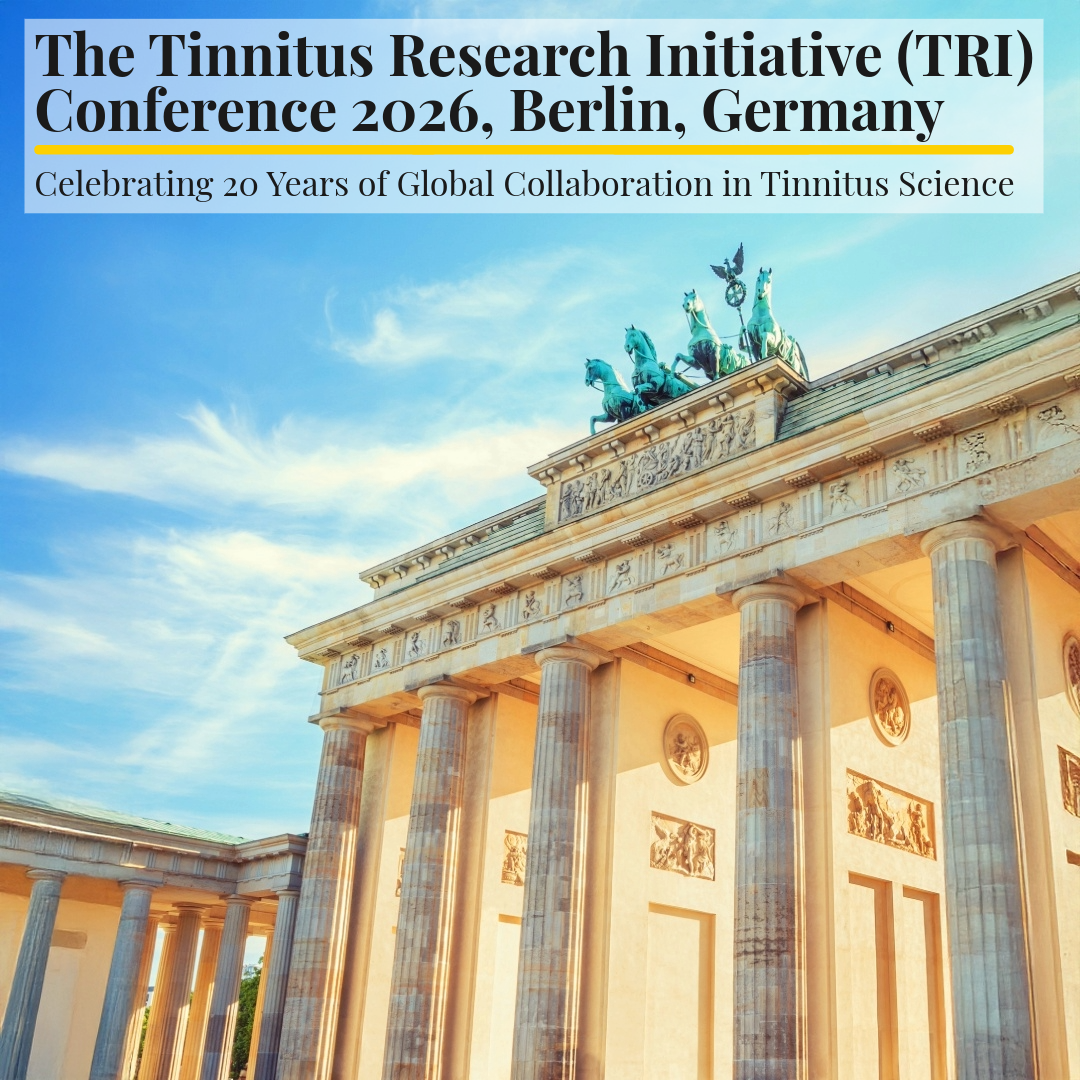
The Tinnitus Research Initiative (TRI) Conference, taking place in Berlin from 16–18 September 2026, marks a significant milestone for the field of tinnitus research. Celebrating two decades of international collaboration, TRI 2026 presents a clear and ambitious scientific vision centred on mechanistic discovery, biomarker-enabled diagnostics, and genuinely multimodal treatment innovation.
Now in its third decade, TRI has established itself as a global hub for translational tinnitus research. The 2026 programme builds on this legacy with a deliberately provocative theme: Jump the Wall. This call challenges researchers and clinicians to move beyond familiar assumptions, cross disciplinary boundaries, and engage with theoretical and clinical domains that have historically remained separate. Alongside this, the complementary theme Discover and Uncover Gaps encourages critical reflection on where knowledge is missing, methods require strengthening, and collaboration could meaningfully accelerate progress.
A defining feature of TRI 2026 is its explicitly multidimensional understanding of tinnitus. Rather than treating auditory, psychological, somatosensory, and neurological explanations as competing models, the conference frames them as interdependent systems. This integrated perspective shapes both the scientific sessions and the practical workshops, reinforcing the view of tinnitus as a complex brain–body phenomenon rather than a single-domain disorder.
Psychosomatic processes and comorbidities form a major focus of the programme. Increasing evidence shows that affective dysregulation, attentional bias, and stress-linked neuroendocrine activity can amplify or sustain tinnitus distress. Sessions explore established and emerging comorbidities, including anxiety, depression, insomnia, and somatic symptom disorders, while highlighting shared neurobiological substrates. Workshops address psychometric assessment, cognitive behavioural therapy, psychosomatic maintenance mechanisms, and somatosensory influences such as temporomandibular and cervical spine factors, combining theory with practical clinical discussion.
Developments in hearing and auditory processing represent another core track. TRI 2026 devotes significant attention to advances in auditory neuroscience, including cochlear synaptopathy, hidden hearing loss, and high-frequency impairment. These peripheral changes are examined alongside central gain mechanisms, altered neural synchrony, and predictive-coding processes, illustrating how tinnitus may evolve from an acute sensory event into a chronic perceptual state embedded within broader auditory–cognitive networks. Workshops on psychoacoustic profiling and hearing aid fitting aim to translate these insights into more precise diagnostic and treatment tools.
The integration of psychiatric research and neurobiological frameworks further distinguishes the 2026 programme. Sessions examine parallels between tinnitus distress and brain network alterations observed in mental health conditions, drawing on findings from MRI, EEG, MEG connectivity analyses, autonomic markers, and emerging digital behavioural phenotyping. A dedicated workshop on biomarkers and diagnostic tools addresses both their promise and the substantial challenges of validation, standardisation, and clinical translation.
TRI 2026 also looks beyond traditional audiology by incorporating perspectives from neurology, psychiatry, pain research, physiotherapy, behavioural science, and digital healthcare. New therapeutic approaches discussed include neuromodulation, structured psychological therapies, pharmacological innovation, physiotherapy-led somatosensory interventions, and digital therapeutics capable of ecological momentary support and AI-assisted decision-making. An integrated tinnitus counselling workshop exemplifies how these domains can be brought together within coherent care models.
Across all tracks, the conference promotes a decisive shift from symptom-focused management toward mechanism-based and personalised care. By aligning methodological standards, strengthening international networks, and fostering longitudinal, multimodal data infrastructures, TRI 2026 positions itself as a catalyst for the next phase of tinnitus science. Its overarching vision is a field that is rigorous, collaborative, and capable of delivering evidence-informed, personalised care for individuals living with tinnitus.
Citation
Aazh H. The Tinnitus Research Initiative (TRI) Conference 2026, Berlin, Germany: Celebrating 20 Years of Global Collaboration in Tinnitus Science. Annual Tinnitus Report, Volume 1, 2026, pp. 91–94.
Click here to read the PDF of this article
Click on the link below to access the full Annual Tinnitus Report 2026: https://hashirtinnitusclinic.com/news/annual-tinnitus-report/