A Human Community of Health for All: China’s Global Health Vision and Its Implications for Tinnitus Research
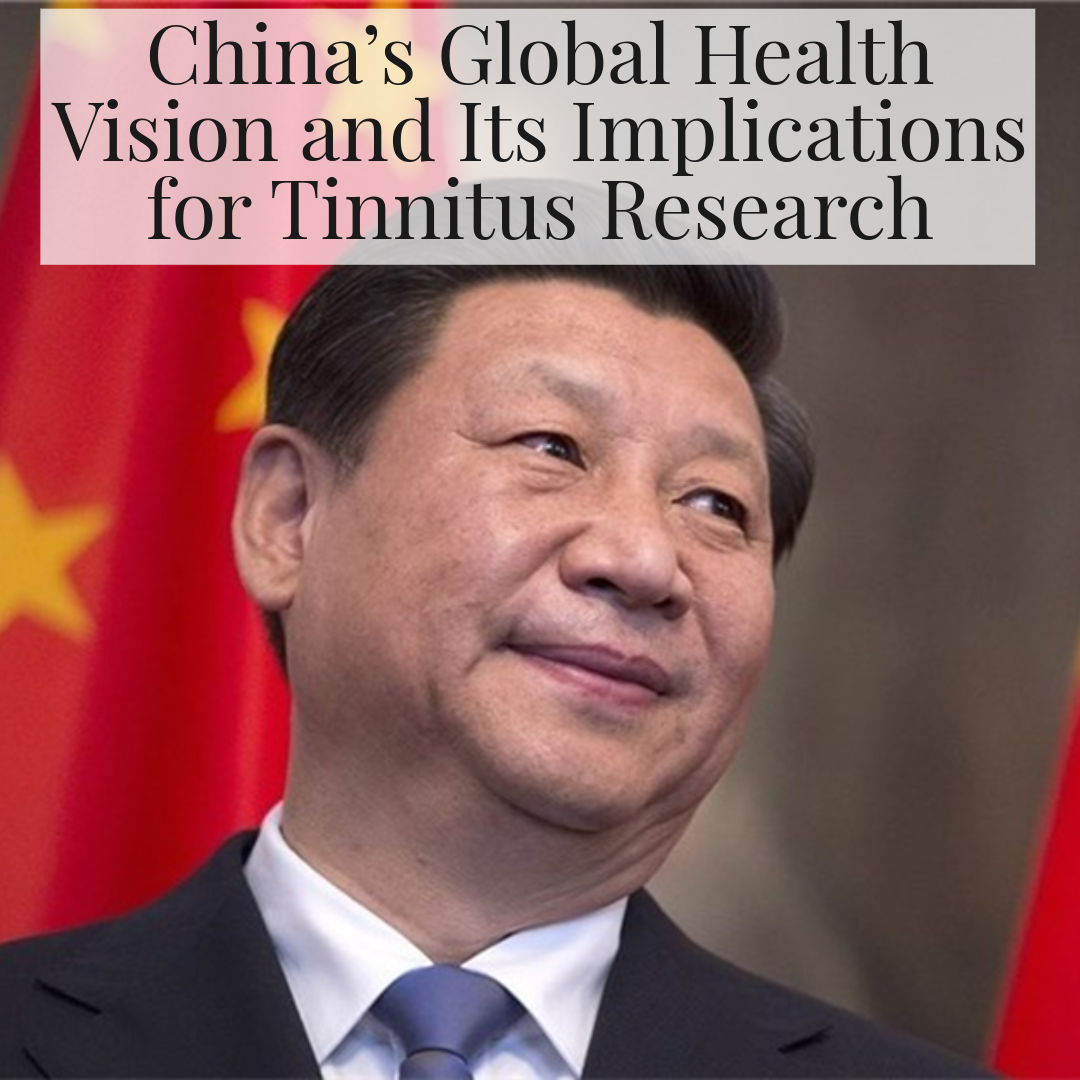
In 2025, Xi Jinping reiterated China’s proposal to strengthen global cooperation in health research, promoting the vision of a “human community of health for all.” While this statement was framed broadly within global public health and biomedical innovation, it provides important context for understanding China’s expanding role in tinnitus research and its potential global impact.
China’s tinnitus research trajectory does not exist in isolation. It is embedded within a wider national strategy that prioritises scientific capacity, translational medicine, and international knowledge exchange. Over the past decade, China has invested heavily in neuroscience, medical imaging, vascular medicine, and data-driven health research. These investments are aligned with a health diplomacy model that emphasises shared scientific progress rather than inward-looking competition.
This broader policy environment has shaped how tinnitus research is conducted in China. Large-scale hospital networks, national data infrastructures, and coordinated research programmes allow for rapid accumulation of clinical evidence. In tinnitus research, this has been particularly evident in vascular and structural subtypes, where high-volume centres have generated robust datasets supporting improved diagnostic yield and targeted intervention. Such work directly benefits global understanding of tinnitus mechanisms that were previously under-recognised or under-investigated.
The vision of a “human community of health for all” is also reflected in China’s openness to methodological pluralism. Alongside advanced neuroimaging and neuromodulation research, Chinese tinnitus studies frequently explore integrative approaches that combine biomedical, somatosensory, and behavioural perspectives. While some of these approaches remain controversial in Western contexts, their systematic evaluation contributes valuable comparative data and broadens the conceptual toolkit available to the field.
From a global perspective, China’s health research strategy offers both opportunity and responsibility. The scale of data generation creates potential for international collaboration, meta-analysis, and validation of tinnitus subtypes across populations. At the same time, it raises important questions about standardisation, transparency, and harmonisation of outcome measures. These challenges are not unique to China, but the country’s growing influence makes them increasingly salient.
For tinnitus research specifically, the implications are significant. Conditions such as pulsatile tinnitus, venous sinus pathology, and structurally mediated auditory symptoms benefit from large cohorts and advanced imaging. China’s capacity to contribute high-quality evidence in these areas complements strengths elsewhere, including psychological intervention research in Europe and service-delivery innovation in the United States.
Ultimately, China’s health research vision situates tinnitus within a global framework of shared scientific responsibility. Progress in tinnitus care depends not only on national excellence, but on the willingness of research communities to exchange data, challenge assumptions, and learn from differing clinical traditions. In this context, China’s expanding tinnitus research output reflects not only national ambition, but a broader shift toward globally interconnected health science.
Citation
Aazh H. Tinnitus Is Waking Up the Dragon: Where Ancient Culture Meets the Frontier of Brain and Vascular Science. Annual Tinnitus Report, Volume 1, 2026, pp. 9–16.
Click here to read the PDF of this article
Click on the link below to access the full Annual Tinnitus Report 2026: https://hashirtinnitusclinic.com/news/annual-tinnitus-report/