Precision Medicine for Tinnitus: Moving from Generalised Care to Targeted Treatment
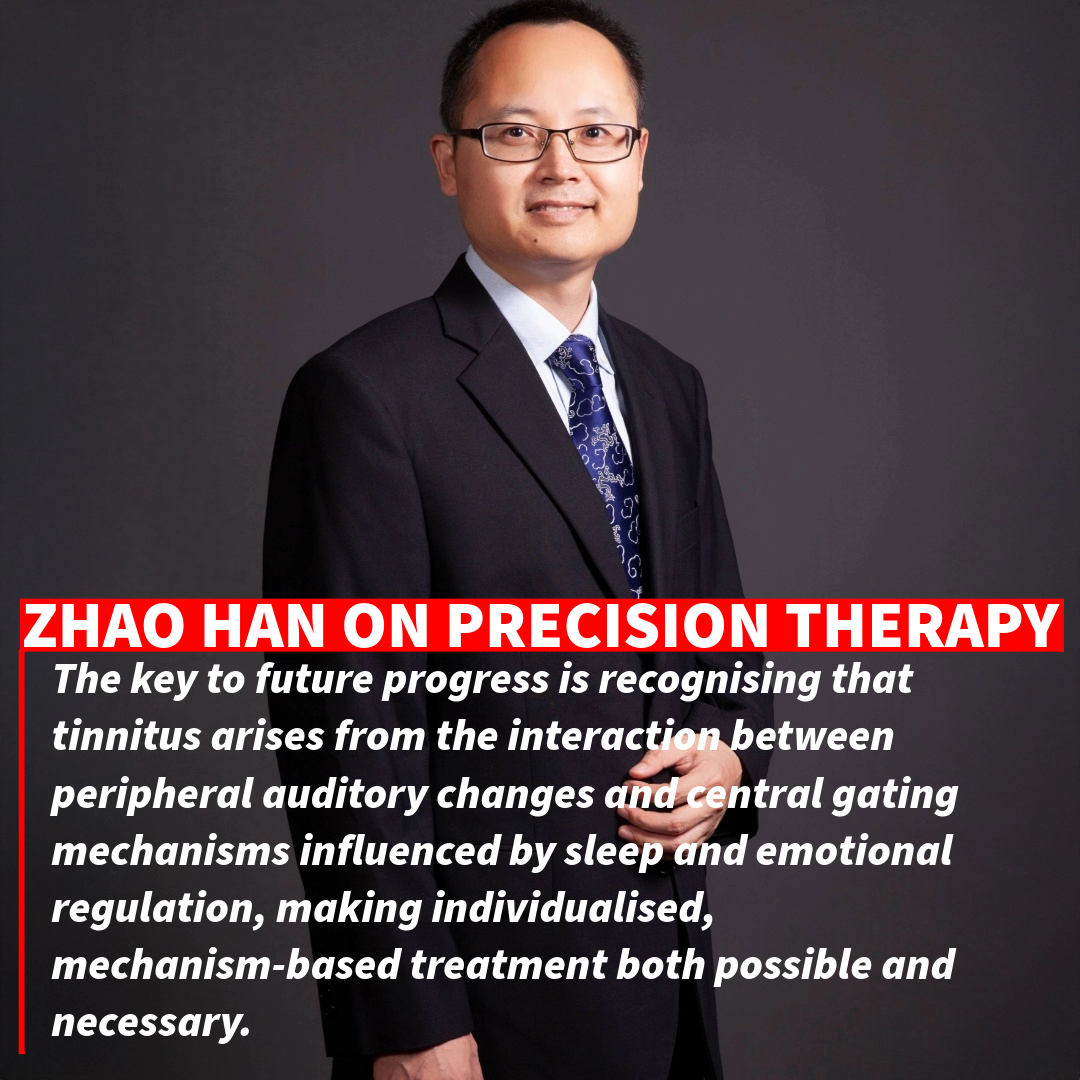
Precision medicine is increasingly shaping how tinnitus is conceptualised and managed. Rather than treating tinnitus as a single, uniform condition, precision approaches seek to identify meaningful subtypes based on underlying mechanisms, clinical features, and individual vulnerability. This article explores how recent research is laying the foundations for more targeted, personalised tinnitus care.
A central premise of precision medicine is that tinnitus emerges through multiple interacting pathways rather than a single cause. Vascular factors, neural connectivity, auditory deprivation, emotional regulation, ageing, and systemic health all contribute to risk and persistence in different ways across individuals. Precision approaches aim to identify which mechanisms are dominant in a given patient and to tailor intervention accordingly.
Recent research highlights the importance of stratification at the point of assessment. Detailed clinical history, audiological profiling, psychoacoustic characterisation, psychological screening, and targeted imaging increasingly form part of comprehensive evaluation. These data allow clinicians to distinguish between tinnitus subtypes that may benefit from very different interventions, such as vascular investigation, sound-based therapies, CBT-informed care, neuromodulation, or medical or surgical referral.
Vascular diagnostics have emerged as a particularly important component of precision tinnitus care. Studies demonstrate that identifying venous or arterial contributors can transform management for selected patients, shifting the clinical goal from symptom coping to mechanism-targeted treatment. Precision medicine therefore challenges traditional assumptions that tinnitus is always idiopathic or untreatable.
Another key dimension is emotional and cognitive regulation. Research increasingly shows that central gating mechanisms and limbic system involvement play a major role in determining whether tinnitus becomes distressing. Precision approaches recognise that two individuals with similar auditory profiles may experience very different outcomes depending on emotional processing, attentional control, and stress reactivity. This insight supports the targeted use of psychological interventions within broader care pathways.
Ageing and multisystem health are also incorporated into precision frameworks. Tinnitus in older adults often reflects cumulative interactions between hearing loss, vascular change, sleep disturbance, and metabolic health. Recognising these patterns allows clinicians to integrate tinnitus care with wider health management rather than treating it in isolation.
Importantly, precision medicine does not imply complexity for its own sake. The article emphasises that the goal is clarity rather than over-investigation. Well-designed stratification allows clinicians to avoid unnecessary interventions while ensuring that high-yield diagnostic pathways are used where appropriate. This approach benefits both patients and healthcare systems by improving efficiency and outcomes.
The article also addresses the future role of biomarkers and technology. Advances in imaging, electrophysiology, and machine-learning analysis of clinical data offer the potential to refine stratification further. While these tools are not yet ready for routine use in most settings, they signal a shift toward more objective and mechanism-informed tinnitus care.
Overall, precision medicine represents a conceptual shift rather than a single intervention. It reframes tinnitus as a set of related but distinct conditions, each requiring tailored assessment and management. As evidence accumulates, this approach offers a pathway toward more effective, confident, and patient-centred tinnitus care.
Citation
Aazh H. Precision Medicine for Tinnitus: An Interview with Professor Zhao Han. Annual Tinnitus Report, Volume 1, 2026, pp. 50–53.
Click here to read the PDF of this article
Click on the link below to access the full Annual Tinnitus Report 2026: https://hashirtinnitusclinic.com/news/annual-tinnitus-report/