From Earth to Sound: Living with Tinnitus
While the Annual Tinnitus Report is grounded primarily in scientific analysis and clinical evidence, it also recognises the importance of lived experience in understanding tinnitus. This article presents a reflective contribution that explores tinnitus not as a pathology to be eliminated, but as an experience that must be lived with, interpreted, and integrated into everyday life.
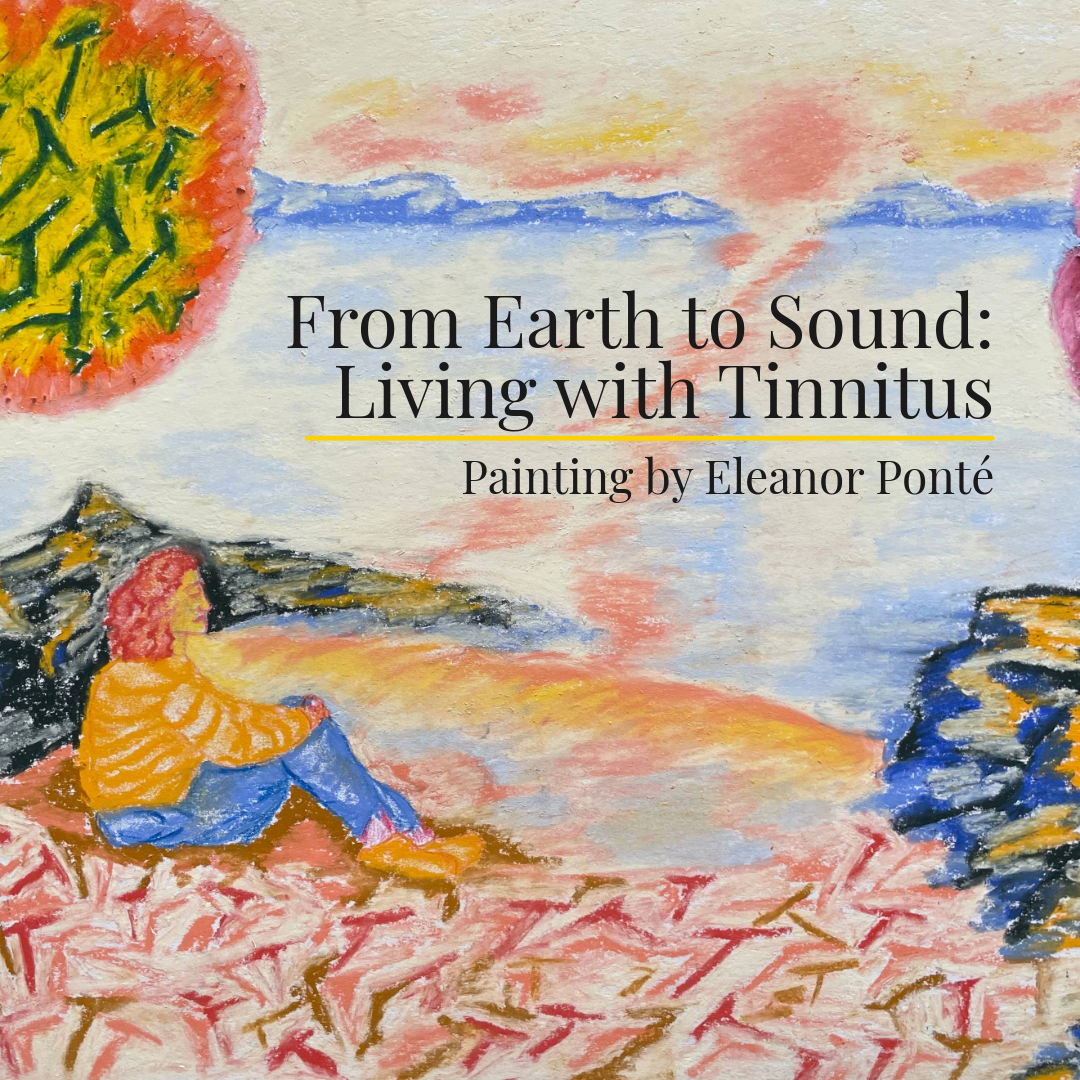
At the centre of this piece is an artwork titled From Earth to Sound, which offers a visual representation of tinnitus as a constant yet evolving presence. Rather than depicting tinnitus as an external enemy or an overwhelming force, the artwork situates it within a broader landscape, suggesting coexistence rather than domination. Repeated motifs embedded within the scene evoke the persistence of tinnitus, while the surrounding environment conveys continuity, resilience, and adaptation.
This perspective resonates with a growing body of research emphasising that the impact of tinnitus is shaped less by the sound itself and more by meaning, attention, and emotional response. For many individuals, tinnitus does not remain static. Its salience fluctuates depending on context, stress, fatigue, and engagement with the world. Artistic expression captures this fluidity in ways that clinical measures cannot.
The article highlights how art can serve as a complementary lens through which tinnitus is understood. Scientific models describe neural activity, cognitive processing, and emotional regulation, but they cannot fully convey what it feels like to live with a persistent internal sound. Artistic representations bridge this gap by communicating experience directly, bypassing technical language and engaging emotional understanding.
Importantly, the piece challenges narratives that frame tinnitus solely as a problem to be solved. While treatment and research remain essential, many people with tinnitus reach a point where adaptation and acceptance become central to wellbeing. This does not imply resignation or minimisation of distress, but rather a shift in relationship with the sound. The artwork reflects this stance by embedding tinnitus within life rather than isolating it as an abnormal intrusion.
The article also underscores the value of including patient perspectives within scientific discourse. Lived experience can inform research priorities, outcome measures, and service design. When patients recognise their own experience reflected in research outputs, trust and engagement are strengthened. Artistic contributions offer a powerful means of achieving this connection.
By including From Earth to Sound within the Annual Tinnitus Report, the editors signal that tinnitus science is not only about mechanisms and interventions, but also about meaning and humanity. Understanding tinnitus requires attention to how individuals make sense of the condition, how they adapt over time, and how identity and self-concept are shaped by chronic sensory experience.
Ultimately, this article invites readers to hold scientific and experiential knowledge together. Tinnitus is at once a neurological phenomenon and a lived reality. Art reminds us that progress in tinnitus care is not measured solely by decibel reduction or questionnaire scores, but by the capacity of individuals to live meaningful, engaged lives alongside sound.
Citation
Aazh H. From Earth to Sound: Living with Tinnitus. Painting by Eleanor Ponté. Annual Tinnitus Report, Volume 1, 2026, pp. 79–82.
Click here to read the PDF of this article
Click on the link below to access the full Annual Tinnitus Report 2026: https://hashirtinnitusclinic.com/news/annual-tinnitus-report/