Clinical Interventions for Tinnitus: What Works, for Whom, and Why
Clinical intervention research continues to be one of the most active and practically relevant areas in tinnitus science. This article reviews the expanding evidence base for tinnitus treatments, focusing on what current research reveals about effectiveness, patient suitability, and the mechanisms through which improvement is achieved.
Over the past year, clinical intervention studies represented the second largest thematic category in the tinnitus literature. Research covered a wide range of approaches, including cognitive behavioural therapy (CBT), digital and internet-delivered CBT, hearing aids, sound therapy, neuromodulation, pharmacological trials, surgical interventions, and multimodal care pathways. Collectively, these studies reinforce a key message: while complete elimination of the tinnitus percept remains challenging, tinnitus-related distress is highly treatable.
CBT continues to demonstrate the most consistent evidence for reducing tinnitus distress, improving quality of life, and enhancing coping. Studies across multiple delivery formats show comparable benefits, including face-to-face therapy, audiologist-delivered CBT, psychologist-led interventions, and digital CBT programmes. Importantly, outcomes are strongest when CBT is embedded within structured assessment, formulation, and follow-up rather than delivered as a generic psychological intervention.
Digital therapeutics have gained increasing attention, particularly in response to limited access to specialist services. App-based and online CBT programmes consistently reduce tinnitus distress and appear cost-effective, especially for individuals with mild to moderate symptoms. These approaches are not positioned as replacements for specialist care, but as scalable components within stepped-care models.
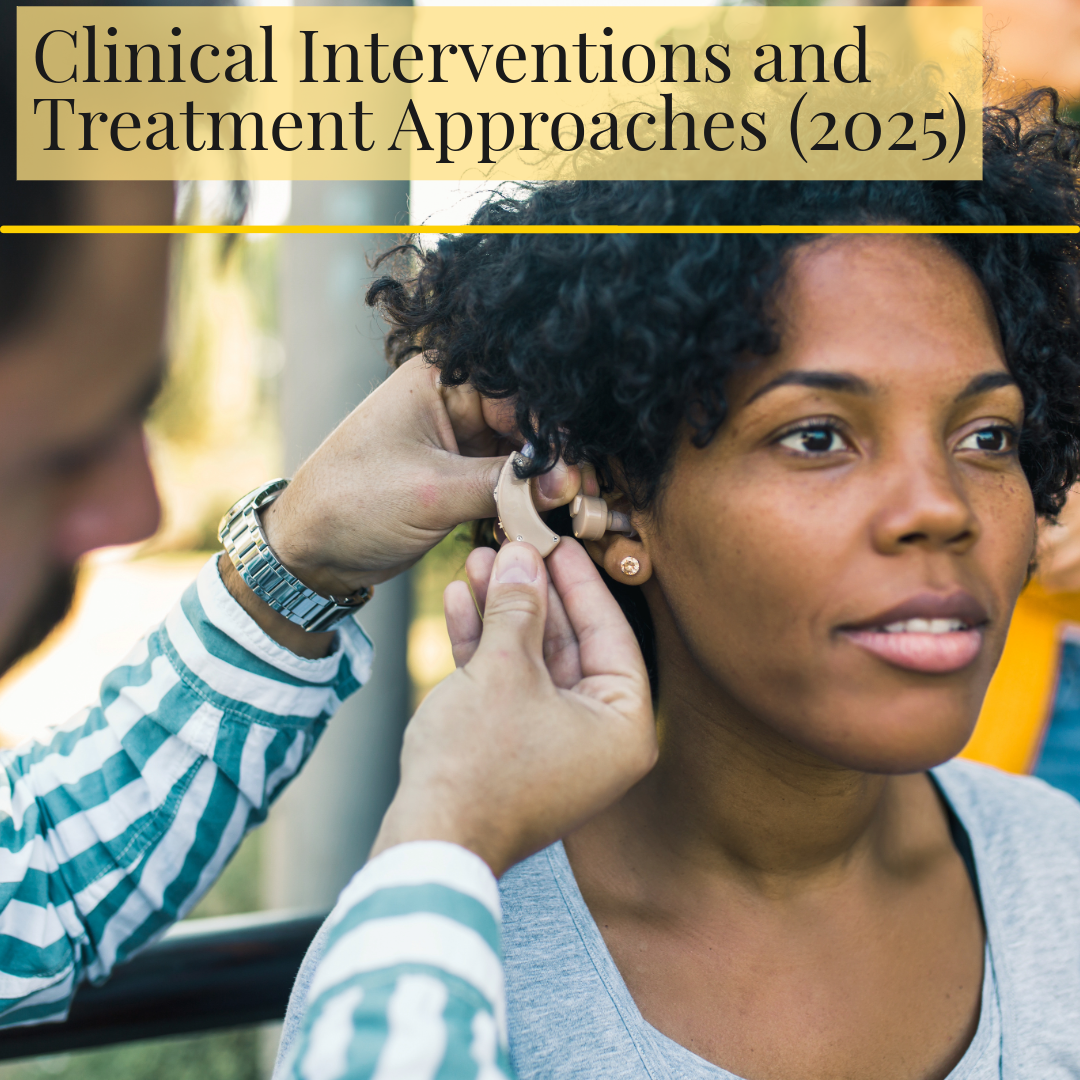
Hearing technologies remain central for individuals with tinnitus associated with hearing loss. Hearing aids, sound generators, and cochlear implants demonstrate benefit through multiple mechanisms, including improved auditory input, reduced listening effort, and indirect effects on emotional and cognitive processing. Recent studies highlight that patient education and expectation management are critical determinants of outcome.
Neuromodulation approaches, including repetitive transcranial magnetic stimulation and bimodal stimulation, continue to show promise for selected subgroups. However, results remain variable, emphasising the importance of precise phenotyping and realistic outcome expectations. Similarly, pharmacological trials have largely produced disappointing results, with few agents demonstrating clinically meaningful benefit for tinnitus itself.
One of the most significant developments in clinical intervention research is the growing recognition of tinnitus subtypes. Pulsatile and structural tinnitus, somatic tinnitus, and tinnitus associated with specific neurological or vascular conditions show markedly different treatment responses. Studies increasingly emphasise the importance of differential diagnosis and targeted intervention rather than one-size-fits-all approaches.
Integrated and multidisciplinary care models consistently outperform isolated interventions. Services that combine audiological assessment, counselling, CBT, sound therapy, and medical or surgical referral where appropriate achieve the most reliable improvements in tinnitus handicap and patient satisfaction. These findings support stepped-care frameworks that match intervention intensity to patient need.
Overall, the clinical literature reflects a shift away from searching for a single cure toward delivering effective, personalised care. Understanding what works, for whom, and why allows clinicians to set realistic goals, optimise outcomes, and support patients in regaining control over their lives.
Citation
Aazh H. Clinical Interventions and Treatment Approaches. Annual Tinnitus Report, Volume 1, 2026, pp. 33–40.
Click here to read the PDF of this article
Click on the link below to access the full Annual Tinnitus Report 2026: https://hashirtinnitusclinic.com/news/annual-tinnitus-report/