Basic Auditory, Animal and Cellular Models: Understanding Tinnitus at Its Biological Roots
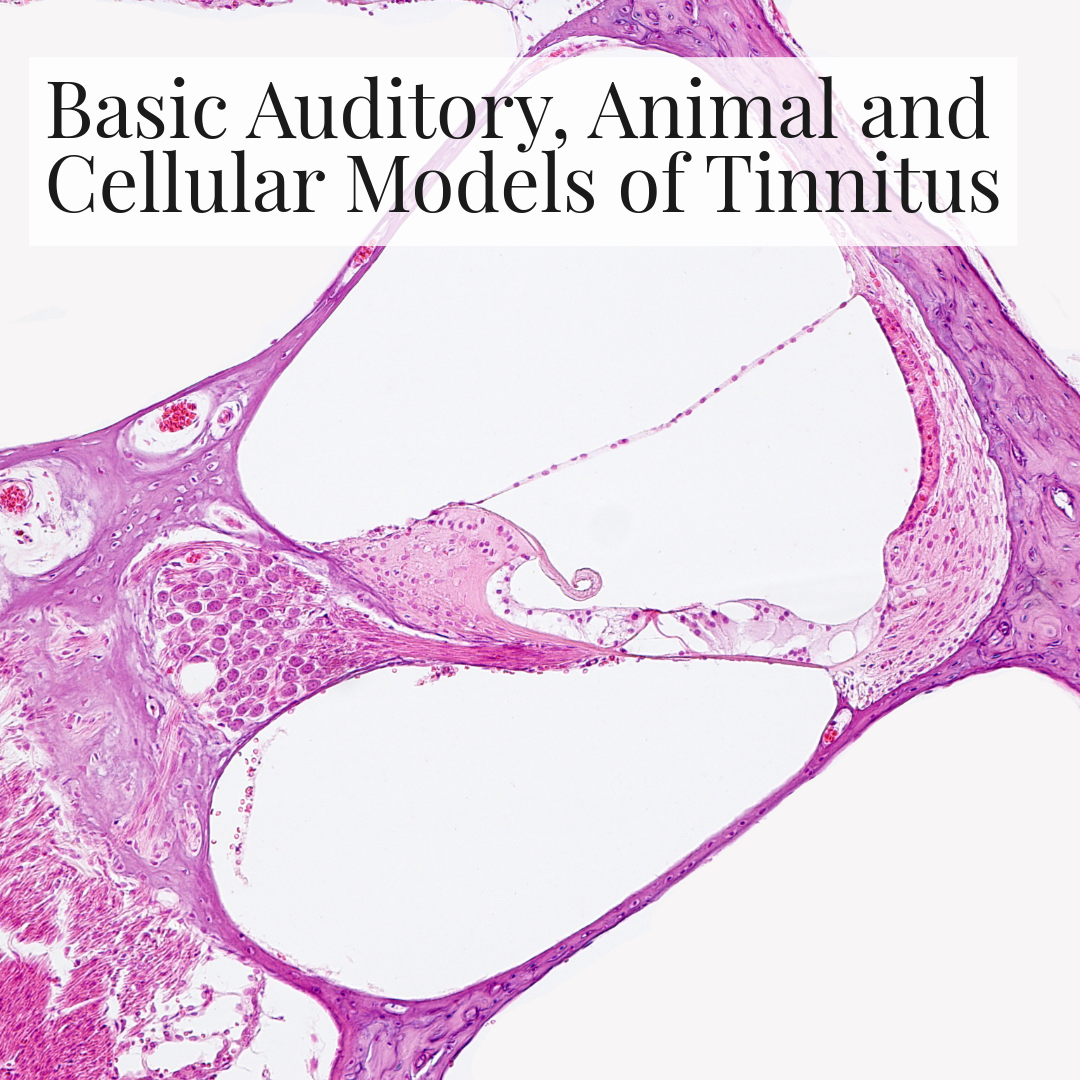
Basic auditory, animal, and cellular research remains essential for understanding how tinnitus originates and why it persists. While clinical and population studies address impact and management, foundational research provides the biological explanations that underpin all future therapeutic development. This article reviews how recent basic science studies continue to inform tinnitus mechanisms at the cellular and systems level.
Animal models remain central to tinnitus research because they allow direct investigation of neural processes that cannot be examined invasively in humans. Over the past year, studies using rodent and other models have focused on changes in synaptic function, inhibitory control, and neural plasticity following noise exposure, ototoxic injury, or ageing. These models consistently demonstrate that tinnitus-related changes extend well beyond the cochlea, involving widespread alterations in central auditory pathways.
One key area of progress is the growing understanding of cochlear synaptopathy. Research shows that damage to synapses between inner hair cells and auditory nerve fibres can occur even when standard audiometric thresholds appear normal. This “hidden hearing loss” may disrupt normal auditory input and trigger maladaptive gain changes in central pathways, increasing the likelihood of tinnitus. Cellular studies have helped clarify how synaptic loss alters neural signalling and temporal precision.
Inhibitory failure is another recurring theme. Animal studies reveal that reduced inhibitory neurotransmission within auditory nuclei can lead to increased spontaneous firing and neural synchrony. These changes mirror patterns observed in human neuroimaging and electrophysiological studies, strengthening confidence in their relevance. Importantly, some studies suggest that inhibitory balance can be partially restored under certain conditions, indicating potential reversibility.
Cellular and molecular research has also advanced understanding of stress-related and inflammatory processes. Noise exposure and chronic stress appear to activate neuroinflammatory pathways that may exacerbate neural hyperexcitability. Oxidative stress, mitochondrial dysfunction, and altered neuromodulatory systems have all been implicated in tinnitus vulnerability and persistence. These findings are informing early-stage exploration of pharmacological targets, even though effective drugs remain elusive.
Another important development is the increasing integration of basic research with computational modelling. By simulating how cellular-level changes scale up to network behaviour, researchers can test hypotheses about tinnitus generation and maintenance. These models provide a bridge between experimental findings and clinical observations, helping to explain why similar peripheral injuries can produce very different tinnitus outcomes.
The article also highlights the ethical and strategic importance of maintaining robust basic research programmes. As funding priorities increasingly favour short-term clinical impact, there is a risk that foundational science may be undervalued. However, without continued investment in animal and cellular research, the pipeline for future therapies will narrow, limiting long-term progress.
Overall, basic auditory and cellular models reinforce the view of tinnitus as a condition rooted in neuroplastic change rather than a static lesion. By revealing mechanisms of vulnerability, adaptation, and potential recovery, this body of research provides the biological foundation upon which future cures and precision interventions must be built.
Citation
Aazh H. Basic Auditory, Animal and Cellular Models. Annual Tinnitus Report, Volume 1, 2026, pp. 63–66.
Click here to read the PDF of this article
Click on the link below to access the full Annual Tinnitus Report 2026: https://hashirtinnitusclinic.com/news/annual-tinnitus-report/