Tinnitus Is Waking Up the Dragon: China’s Expanding Role in Global Tinnitus Science
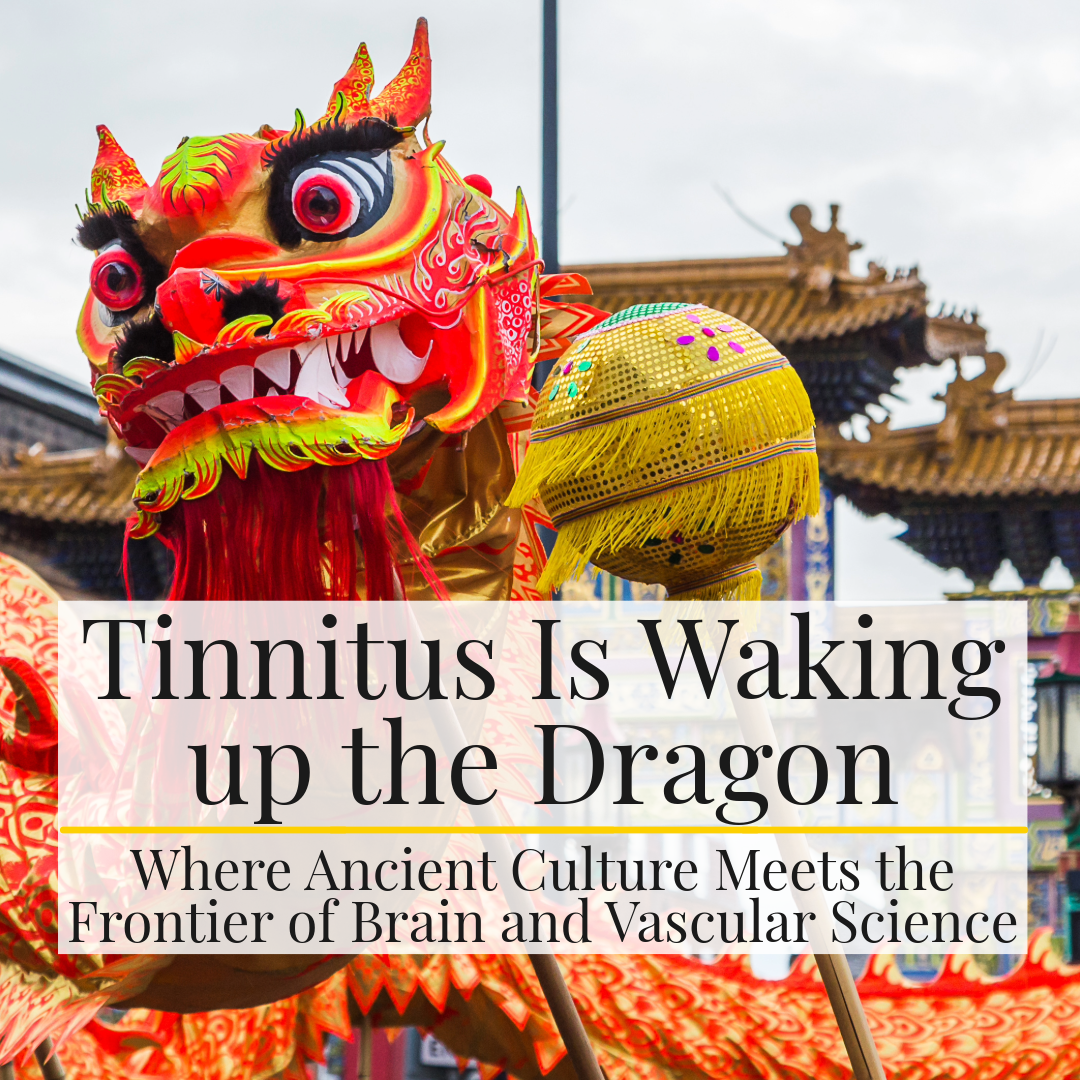
China’s rapid emergence as a global leader in tinnitus research represents one of the most striking developments in the field over the past decade. This article examines how scale, strategic investment, and scientific ambition have positioned China at the forefront of tinnitus science, with implications that extend far beyond national borders.
Based on publication analysis from the Annual Tinnitus Report 2026, China now produces the largest share of tinnitus-related research worldwide. Its contribution accounts for more than one fifth of all eligible publications over the past year. This growth reflects sustained national investment in neuroscience, medical imaging, vascular medicine, and translational research, as well as strong institutional coordination across universities and research hospitals.
One of the most distinctive features of China’s tinnitus research profile is its focus on vascular and structural mechanisms. Chinese studies have played a major role in advancing understanding of venous sinus abnormalities, arterial contributors, and haemodynamic factors associated with both pulsatile and non-pulsatile tinnitus. This work has helped reposition certain tinnitus subtypes as potentially identifiable and, in selected cases, treatable conditions. The use of structured imaging protocols has improved diagnostic precision and increased clinical confidence in managing complex presentations.
Alongside vascular research, China has made substantial contributions to tinnitus neuroscience. Studies examining auditory-limbic interactions, thalamocortical pathways, and large-scale brain networks have reinforced the view of tinnitus as a distributed neural condition rather than a purely peripheral auditory disorder. Research into altered connectivity, neural synchrony, and central gating mechanisms has aligned closely with emerging international models of tinnitus pathophysiology.
China’s capacity for large cohort studies and advanced neuroimaging has been particularly influential in this area. High-volume clinical centres enable the collection of robust datasets, allowing researchers to explore subtyping, variability, and treatment response at a scale that is difficult to achieve elsewhere. These strengths have accelerated progress in precision-oriented approaches to tinnitus research.
The article also reflects on the broader cultural and institutional context shaping Chinese tinnitus science. Long-standing traditions of integrative medicine coexist with cutting-edge biomedical research, creating a research environment that is both diverse and experimentally ambitious. National funding structures and coordinated research priorities further support rapid translation from hypothesis to publication.
Importantly, China’s rise is not framed as competition, but as part of an increasingly interconnected global research ecosystem. The article emphasises that progress in tinnitus science depends on interaction between different scientific cultures. China’s mechanistic and vascular focus complements the population-health, service-delivery, and psychological research strengths seen in other regions, particularly the United States and Europe.
The metaphor of “waking up the dragon” therefore reflects a field entering a new phase of global maturity. As leadership diversifies and collaboration deepens, tinnitus research is becoming more ambitious, more precise, and better equipped to address the complexity of tinnitus as a clinical and human experience.
Citation
Aazh H. Tinnitus Is Waking Up the Dragon: Where Ancient Culture Meets the Frontier of Brain and Vascular Science. Annual Tinnitus Report, Volume 1, 2026, pp. 9–16.
Click here to read the PDF of this article
Click on the link below to access the full Annual Tinnitus Report 2026: https://hashirtinnitusclinic.com/news/annual-tinnitus-report/