Pulsatile, Venous and Structural Tinnitus: Identifying Treatable and Curable Subtypes
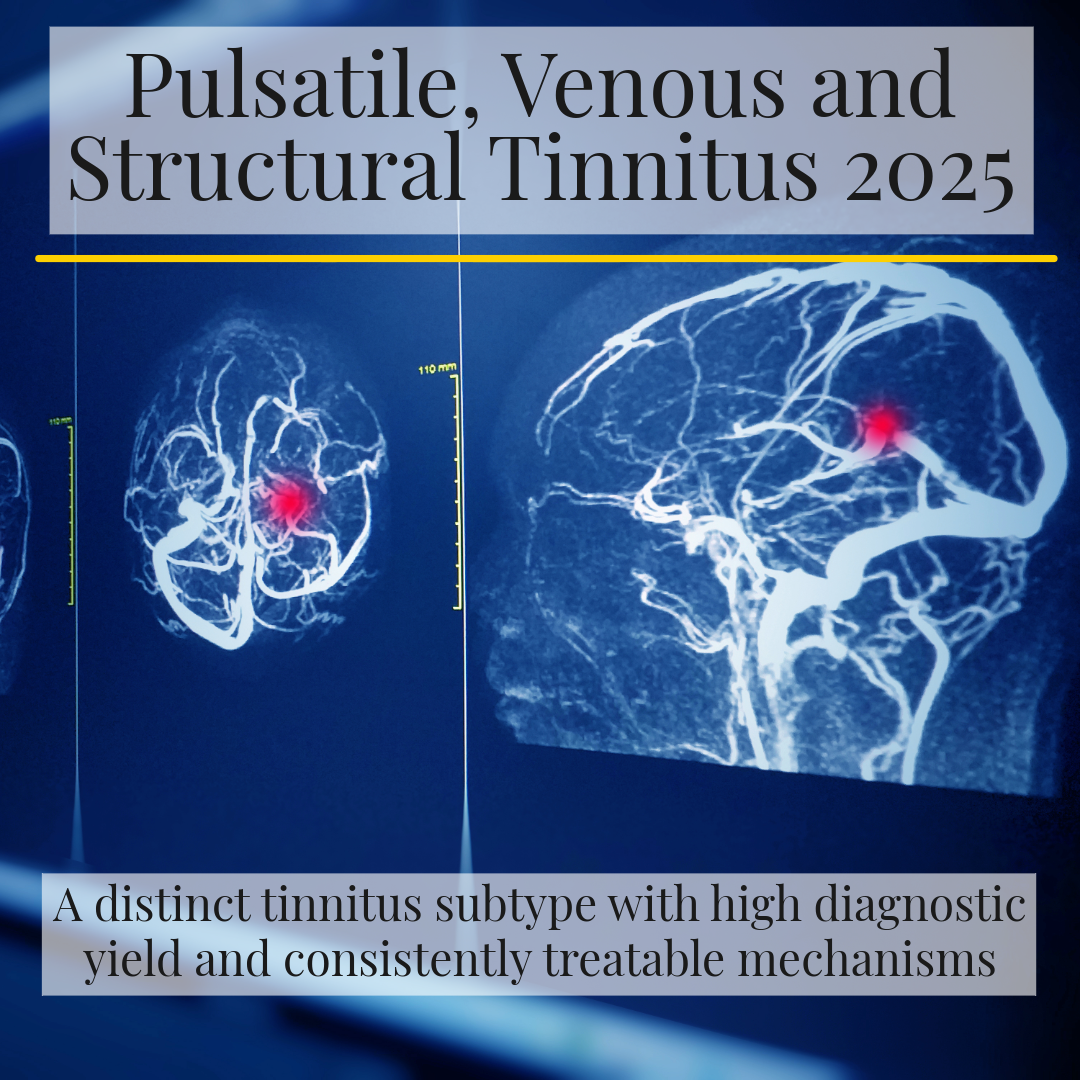
Pulsatile, venous, and structural tinnitus represents one of the most clinically important areas of progress in tinnitus research. Unlike subjective non-pulsatile tinnitus, these forms are often linked to identifiable anatomical or vascular abnormalities and, in selected cases, may be partially or completely curable. This article reviews how recent research has strengthened diagnostic confidence and transformed clinical management in this area.
Over the past year, publications focusing on pulsatile and structural tinnitus accounted for a substantial and growing proportion of the tinnitus literature. Studies increasingly emphasise that pulsatile tinnitus should be approached as a distinct clinical entity rather than a variant of subjective tinnitus. The defining feature is rhythmic sound perception synchronous with the heartbeat, often reflecting an underlying vascular mechanism.
Venous causes, including sigmoid sinus diverticulum, venous sinus stenosis, and dehiscence, feature prominently in recent studies. Advances in imaging techniques, particularly high-resolution CT and MR venography, have improved the detection of subtle abnormalities that were previously missed. These developments have enabled more precise diagnosis and better selection of patients for intervention.
Arterial causes, although less common, remain clinically significant. Arteriovenous fistulas, carotid artery abnormalities, and high-flow vascular lesions can generate audible turbulence perceived as tinnitus. Early identification is critical, as some of these conditions carry neurological risk beyond tinnitus itself. Research highlights the importance of prompt referral and multidisciplinary evaluation involving otology, radiology, neurology, and vascular specialists.
Structural abnormalities of the temporal bone, such as superior semicircular canal dehiscence and other third-window syndromes, are also increasingly recognised contributors. These conditions may present with mixed auditory and vestibular symptoms, including sound- or pressure-induced vertigo alongside tinnitus. Surgical correction has shown high success rates in carefully selected cases, with significant symptom improvement.
One of the most important messages emerging from this body of work is the value of structured diagnostic pathways. Studies consistently show that when patients with suspected pulsatile tinnitus undergo systematic assessment using targeted imaging protocols, a treatable cause can be identified in a substantial proportion of cases. This contrasts sharply with older assumptions that pulsatile tinnitus is rare or idiopathic.
The article also addresses the psychological impact of pulsatile tinnitus. The rhythmic and intrusive nature of the sound often generates high levels of anxiety, particularly when patients fear serious underlying disease. Clear diagnosis and explanation are therefore therapeutic in themselves, even when intervention is not indicated.
Importantly, the growing literature challenges nihilistic approaches to tinnitus management. Pulsatile and structural tinnitus demonstrate that tinnitus is not a single condition but a spectrum of disorders requiring differentiated pathways. Recognising these subtypes allows clinicians to move beyond symptom management toward targeted treatment and, in some cases, cure.
Citation
Aazh H. Pulsatile, Venous and Structural Tinnitus 2025: A Distinct Tinnitus Subtype with High Diagnostic Yield and Consistently Treatable Mechanisms. Annual Tinnitus Report, Volume 1, 2026, pp. 45–49.
Click here to read the PDF of this article
Click on the link below to access the full Annual Tinnitus Report 2026: https://hashirtinnitusclinic.com/news/annual-tinnitus-report/